Eggshells and vinegar. Ten days on the counter. That’s water-soluble calcium — and it fixes the thing most people are actually here for, which is tomatoes rotting from the bottom.
Here for blossom end rot? Make this, then read how to fix blossom end rot — calcium is half the answer and watering is the other half. Skipping the second half is why people make this and still lose fruit.
Make it
You need: clean dry eggshells (or oyster shells) · raw vinegar — apple cider or brown rice · a glass jar
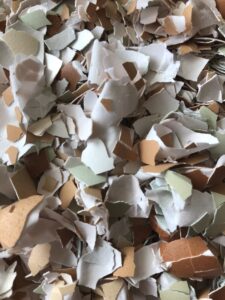
- Clean and dry the shells. Rinse the membrane off. Wet shells will rot rather than extract.
- Bake at 200°F (95°C) for 10–15 minutes. This dries them and makes them brittle enough to crush properly. They should snap, not bend.
- Crush them. Smaller pieces mean more surface area and a faster extraction. A rolling pin over a tea towel is plenty.
- Fill t
 he jar one-third to one-half full with the crushed shells. Don’t pack it — the mix needs to fizz.
 - Pour in vinegar until the shells are fully submerged, with a little headroom above. It will bubble immediately. That’s the reaction starting.
- Leave it at room temperature for 7–10 days. Stir or swirl lightly once a day. Lid on loose — it needs to off-gas.
- Strain into a clean glass bottle once the bubbling has stopped.
It’s done when the bubbling stops. No fizz when you swirl it means the calcium has been fully extracted and the vinegar has nothing left to react with.
Keeps 6–12 months in a cool, dark cupboard.
How much to use
This is concentrated. Two measurements, same strength — use whichever matches your watering can.
| Use | Dilution | How often | Notes |
|---|---|---|---|
| Foliar spray | 1 tsp per quart / litre | Weekly | Early morning or evening. Not in full sun. |
| Soil drench | 1 tbsp per gallon | Weekly | Water in around the base. |
| Larger batches | 1 tbsp per gallon | Weekly | Same ratio, scaled. Mix fresh each time. |
Timing matters more than dose. Use this during flowering and fruiting — not during early vegetative growth. Calcium early on pushes the plant in the wrong direction when what it needs is nitrogen and leaf. Start when you see the first flowers.
Which crops benefit most
Anything that fruits and is prone to calcium problems:
| Crop | When to start | What you’re preventing |
|---|---|---|
| Tomatoes | First flowers | Blossom end rot — the classic sunken black patch on the base |
| Peppers | First flowers | Same rot, often paler and papery rather than black |
| Squash & zucchini | First female flowers | Fruit that shrivels at the blossom end before it sizes up |
| Melons | Fruit set | Soft, collapsing ends on developing fruit |
What calcium shortage actually looks like
Calcium doesn’t move around inside a plant the way nitrogen does. Once it’s in a leaf it stays there. So a deficiency always shows up in the newest growth and the developing fruit first — never the old leaves. If your bottom leaves are yellowing, that’s a different problem.
On tomatoes
A water-soaked patch at the blossom end of the fruit — the end furthest from the stem — that turns sunken, leathery and dark brown or black. It starts small and spreads. The fruit is still edible if you cut the patch off, but it won’t ripen properly. Growing tips may also look stunted or distorted.
On peppers
The same end rot, but usually tan or papery white rather than black, and often on the side of the fruit rather than the tip. Easy to mistake for sunscald — sunscald is on the sun-facing side and has a bleached look, calcium rot is at the blossom end.
On squash and zucchini
Small fruit that yellows at the tip, softens and shrivels instead of growing on. Often blamed on poor pollination, and sometimes that’s right — but if the tip goes mushy rather than simply dropping off, look at calcium.
On new growth generally
Young leaves coming through cupped, crinkled or with dead patches at the edges. Growing points that stall or die back.
Before you reach for calcium, check your watering. Most blossom end rot is not a calcium shortage in the soil — it’s calcium the plant couldn’t move because watering was inconsistent. Erratic watering causes it in soil with plenty of calcium available. Adding more won’t help if that’s your problem. The full fix is here.
Why vinegar works
Eggshell is mostly calcium carbonate, which plants can’t take up directly — it’s the same reason you can’t just crush shells into the soil and expect a fast result. The acetic acid in vinegar reacts with the carbonate and converts it into calcium acetate, which dissolves in water and moves into the plant.
The bubbling is that reaction happening in front of you. It’s carbon dioxide coming off. When it stops, the acid has used up what it can reach.
You’ll see versions of this recipe that char the shells black over a flame instead of drying them in the oven. That produces a different compound and a more aggressive extraction. The oven method here is gentler, easier to get right, and plenty for garden use.
Common questions
Can I use white vinegar?
It will work — the acetic acid is what does the job. Raw apple cider or brown rice vinegar is preferred because it brings its own microbial life along with it, which matters if you’re feeding soil biology rather than just the plant.
Do I have to bake the shells?
You want them properly dry and brittle. The oven is the reliable way to get there. Air-drying on a windowsill for a few days works if you’re not in a hurry.
My mix stopped bubbling after two days. Is it ready?
Probably not — it more likely means you ran short of vinegar for the amount of shell. Top it up and see whether it starts again. If it does, it wasn’t finished.
Can I reuse the leftover shells?
There’s little left worth extracting, but they’re not wasted. Straight into the compost.
Can I use oyster shells instead?
Yes, and they’re higher in calcium than eggshells. Crush them well — they’re harder, and the extraction takes longer.
Will this fix blossom end rot on fruit that already has it?
No. Damaged fruit stays damaged. This protects the fruit that sets after you start. Get the watering consistent at the same time or you’ll be back here next season.
Can I mix it with other foliar feeds?
Keep calcium separate. It reacts with phosphorus and sulphur inputs and both end up less available. Alternate weeks rather than combining.
Helpful Links
- How to fix blossom end rot — the watering half of the problem
- Natural ways to add calcium to soil — slower, longer-lasting amendments
- How to test your soil at home — find out whether you’re actually short before you treat
- Which plants benefit from water-soluble calcium
- Applying water-soluble calcium in the garden