
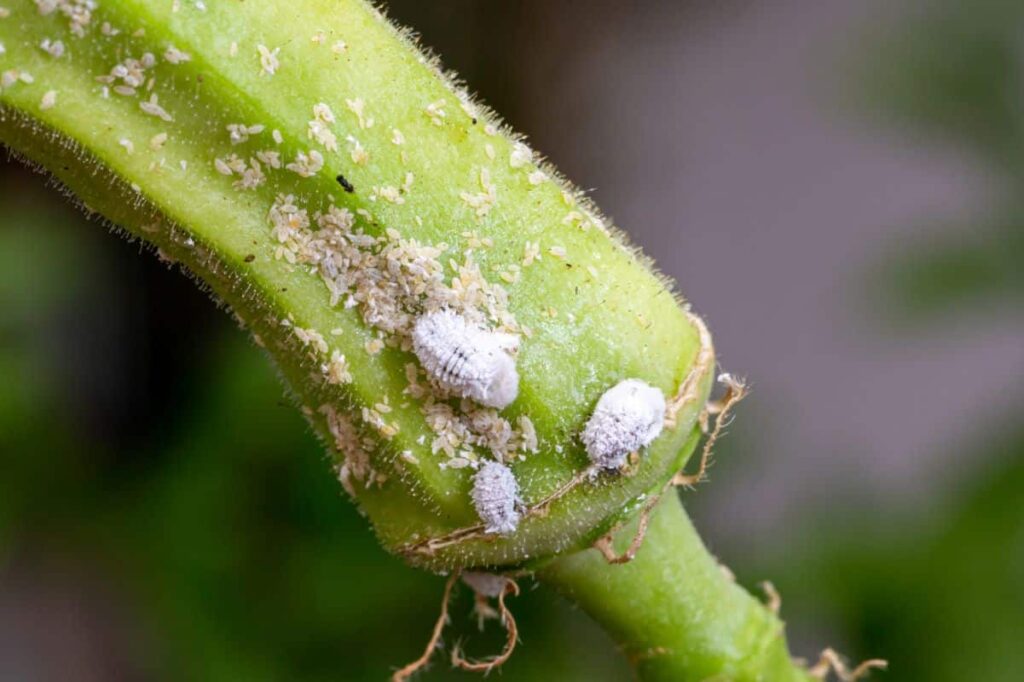
Mealybugs may be tiny, but don’t let their size fool you—these fluffy white pests can cause big problems in the garden. Feasting on plant juices and secreting sticky honeydew, they weaken your plants and create the perfect environment for mold and disease to thrive.
Found most often in warm, humid conditions or indoor greenhouses, mealybugs can appear suddenly and multiply fast. If left unchecked, they can destroy your harvest before you even know they’re there.
This guide will help you spot, treat, and prevent mealybug infestations using safe, natural, and effective organic methods.
What Are Mealybugs?
Mealybugs are soft-bodied, wingless insects that look like small bits of white cotton or fluff. They cluster along stems, in leaf joints, or on the underside of leaves. Their name comes from their waxy, mealy coating, which helps protect them from predators and some chemical sprays.
Mealybugs suck sap from your plants using needle-like mouthparts. This weakens the plant, causes stunted growth, and eventually leads to leaf drop, deformed fruit, or even death. Worse yet, the honeydew they excrete attracts ants and encourages the growth of sooty mold fungus.
What Mealybugs Look Like
- White or pale pink, cotton-like appearance
- 1/16″ to 1/8″ long (about the size of a sesame seed)
- Cluster in groups, often found:
- Where leaf meets stem
- Under leaves
- On growing tips or flower buds
- Covered in a waxy coating that may have tail-like filaments
- Often surrounded by sticky honeydew or black mold
Signs of a Mealybug Infestation
Early detection is key! Look for:
- White, cottony patches on stems, leaf joints, or underside of leaves
- Yellowing or dropping leaves
- Sticky residue (honeydew) on plants or nearby surfaces
- Black sooty mold growing on the honeydew
- Stunted growth, wilting, or shriveled fruit
- Ants farming the mealybugs for their sweet honeydew
When Are Mealybugs Most Active?
Mealybugs thrive in warm, humid conditions, especially in greenhouses or indoor gardens. Outdoors, they are most active in late spring through summer, when the temperatures rise and plants are actively growing.
They can reproduce year-round in warm climates or heated indoor spaces, making vigilance crucial.
Plants Most Affected by Mealybugs
Mealybugs are not picky. They’ll attack a wide variety of plants, including:
- Tomatoes
- Peppers
- Eggplants
- Cucumbers
- Beans
- Lettuce
- Basil and other herbs
- Fruit trees (especially citrus)
- Houseplants and ornamentals (succulents, hibiscus, ferns, orchids)
How to Get Rid of Mealybugs Organically
Here are the most effective non-toxic methods for controlling and eliminating mealybugs:
🧼 1. Manual Removal
Use a cotton swab dipped in rubbing alcohol (isopropyl alcohol) to dab mealybugs directly. This dissolves their protective coating and kills them instantly.
For larger infestations:
- Spray plants with a solution of 70% isopropyl alcohol and water (1:1 ratio)
- Use a soft toothbrush or damp cloth to wipe off bugs and eggs
Repeat every few days until no new mealybugs appear.
🧴 2. Neem Oil or Insecticidal Soap
Spray a diluted neem oil solution directly onto the plant, making sure to cover the undersides of leaves and stems where bugs hide.
Neem oil disrupts mealybug reproduction and feeding while also deterring future infestations.
You can also use insecticidal soap (store-bought or DIY with castile soap + water) to suffocate mealybugs. Spray in the evening or early morning to avoid leaf burn.
🐞 3. Release Beneficial Insects
Encourage or release natural predators into your garden, especially in a greenhouse setting.
Top predators include:
- Ladybugs
- Green lacewings
- Mealybug destroyers (Cryptolaemus montrouzieri)
- Parasitic wasps
These insects feed on mealybugs at all life stages and can help maintain long-term balance.
🧪 4. Use Horticultural Oils
Horticultural oil or dormant oil sprays can smother mealybugs and their eggs. Use only as directed and during appropriate weather conditions (avoid use during high heat or direct sun).
🧊 5. Isolate Infected Plants
If growing in containers or indoors, immediately move affected plants away from healthy ones to prevent the spread.
Sanitize tools, pots, and surrounding surfaces. Mealybugs can travel, especially when ants are involved.
Preventing Mealybugs in the Garden
Once you’ve removed mealybugs, keep them away for good with these tips:
✅ Garden Hygiene
- Regularly inspect plants for signs of pests
- Prune dead or heavily infested foliage
- Avoid over-fertilizing—especially with high-nitrogen fertilizers, which encourage weak, juicy growth mealybugs love
- Clean and disinfect pots, tools, and surfaces
🌿 Boost Plant Immunity
- Feed plants organically to strengthen their resistance
- Ensure good airflow between plants
- Keep leaves dry—mealybugs thrive in humid, sheltered areas
🐜 Control Ants
Ants protect mealybugs in exchange for their honeydew. Controlling ants will reduce mealybug survival.
Use:
- Sticky traps on tree trunks or pots
- Diatomaceous earth around the base of plants
- Companion plants like mint, tansy, or pennyroyal to deter ants
Companion Plants That Help Deter Mealybugs
Plant these around vulnerable crops to repel mealybugs naturally:
Final Thoughts
Mealybugs are sneaky, persistent pests—but with early detection, organic controls, and ongoing prevention, you can keep your garden healthy and mealybug-free.
Regular inspections, balanced fertilization, and plant diversity go a long way toward reducing the likelihood of infestations. As always, aim for a garden that supports beneficial insects and healthy soil, and you’ll have fewer pest issues in the long run.