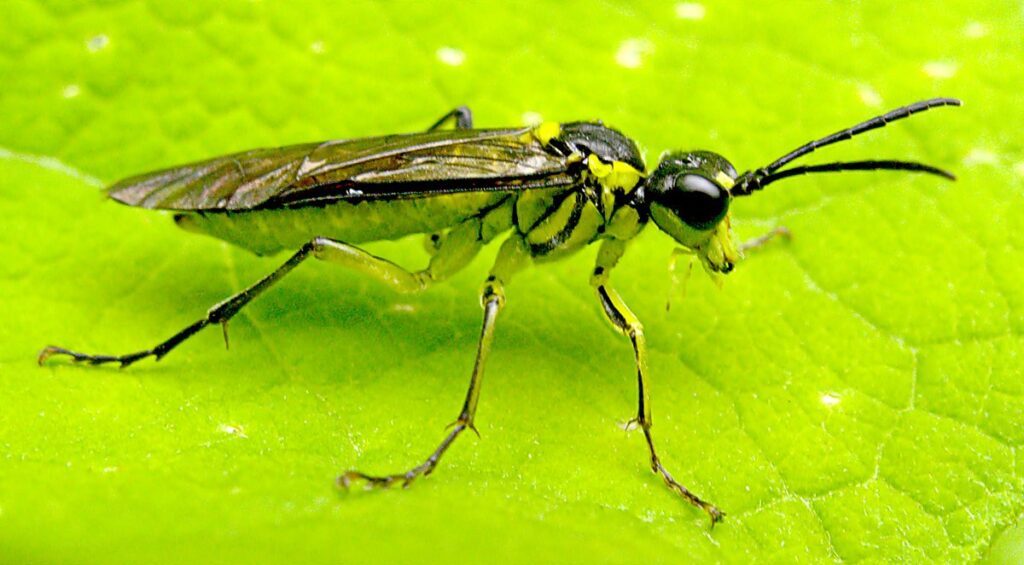
Sawflies might look like small wasps, but these flying pests are plant-eating machines—especially in their larval stage. While adult sawflies are mostly harmless, their larvae can defoliate entire shrubs or trees in a matter of days, leaving plants ragged, stressed, and vulnerable to further damage.
If you’re noticing skeletonized leaves, missing foliage, or wriggly green caterpillar-like insects on your plants, sawflies could be the culprits. Here’s everything you need to know to identify, manage, and prevent sawflies naturally and effectively.
What Are Sawflies?
Sawflies belong to the wasp family, but don’t sting. Their name comes from the saw-like ovipositor (egg-laying organ) females use to cut slits into leaves and stems to lay eggs. While adults resemble harmless flying insects, it’s the larvae you need to watch out for. These soft-bodied, leaf-munching critters resemble caterpillars and can cause major feeding damage in a very short time.
Signs of a Sawfly Infestation
Sawfly larvae tend to feed in groups and prefer the undersides of leaves. Depending on the species, they may skeletonize leaves (eating the tissue between veins) or consume entire leaves completely.
Here’s what to look for:
- Skeletonized or partially chewed leaves
- Groups of green, brown, or yellowish worm-like larvae feeding on the undersides of leaves
- Thin silk webbing (in some species)
- Curled or browned leaf edges
- Frass (insect droppings) on leaves or around plant bases
Common Types of Sawflies in Gardens
There are over 800 species of sawflies in North America, but here are the most common troublemakers for gardeners:
🌿 Rose Sawfly (Rose Slug)
- Feeds on rose bushes
- Larvae resemble tiny green caterpillars
- Skeletonizes leaves until only veins remain
🌲 Pine Sawfly
- Attacks conifers, especially young pines and spruces
- Larvae are green or yellow with black heads and may feed in groups
- Can cause severe defoliation in early spring
🪻 Columbine Sawfly
- Targets columbine (Aquilegia) plants
- Small green larvae strip leaves down to the stems
- Often mistaken for caterpillar damage
🍃 Dogwood Sawfly
- Targets dogwoods and viburnum
- Hairless, wrinkled larvae feed on leaves and bore into branches as they mature
When and Where Sawflies Are a Problem
Sawflies tend to appear in spring through early summer, depending on the species and climate. Eggs are often laid in leaf tissue, where they hatch into hungry larvae within a few days to a week.
They’re particularly problematic in gardens with:
- Ornamental shrubs like roses, dogwoods, and columbine
- Conifers such as pine or spruce
- Dense foliage and limited airflow
- Minimal pest surveillance (sawflies can strike fast)
How to Get Rid of Sawflies (Organically)
Dealing with sawflies early is essential, as larvae grow quickly and feed aggressively. Fortunately, there are effective, organic-friendly ways to stop them—without harming pollinators or your plants.
🖐️ 1. Manual Removal
If the infestation is still manageable, hand-picking larvae is a quick and chemical-free solution.
- Inspect the undersides of leaves in the morning or evening.
- Use gloves or a soft brush to remove larvae.
- Drop them into a container of soapy water to kill them.
Bonus: Gently spray leaves with a hose to dislodge larvae—just be cautious not to damage delicate plants.
🌱 2. Neem Oil or Insecticidal Soap
Spraying plants with a neem oil solution or insecticidal soap will coat the larvae and disrupt their growth and digestion.
- Spray in the early morning or late afternoon to avoid sun damage.
- Reapply after rain or as needed based on pest pressure.
Note: Neem oil may not be as effective on mature sawfly larvae, so use it early in the life cycle.
🐛 3. BT (Bacillus thuringiensis) Is Not Effective
Unlike true caterpillars, sawflies are not in the Lepidoptera family, so the common organic pesticide Bacillus thuringiensis kurstaki (Bt) will not work on them.
Don’t waste your time or money on Bt for sawflies!
🦠 4. Beneficial Insects
Attract or introduce natural predators like:
Create a pollinator-friendly garden with native flowering plants, fresh water sources, and safe shelter to naturally control pest populations.
🔥 5. Pruning and Sanitation
Prune off heavily infested branches or leaves and dispose of them far from the garden—not in your compost pile!
Keep your garden free of fallen debris and overwintering shelter for adults, especially in late fall and early spring.
Preventing Future Sawfly Infestations
You can’t always prevent pests, but these strategies make your garden less inviting to sawflies:
- Inspect susceptible plants weekly, especially in spring and early summer.
- Thin dense growth to improve airflow and make it harder for females to lay eggs.
- Apply a layer of mulch to suppress any overwintering larvae in the soil (use wood chips, bark, or straw).
- Encourage beneficial predators through companion planting and pollinator habitats.
Companion Plants That Help Repel Sawflies
While companion planting isn’t a silver bullet, some herbs and flowers can help deter sawflies naturally:
- Garlic and chives: Strong-smelling alliums that repel many insects
- Yarrow: Attracts predatory insects
- Tansy: Known to repel flying insects, including sawflies
- Lavender and mint: Their aromatic oils can confuse or deter egg-laying adults
Final Thoughts
Sawflies may be small, but their feeding habits can lead to big problems if left unchecked. Fortunately, with early detection and a combination of organic pest control methods, you can protect your garden without resorting to harsh chemicals.
Stick to regular inspections, strengthen your plants with healthy soil and airflow, and take action at the first sign of larvae. With a bit of persistence, sawflies won’t stand a chance in your organic garden.