
WThere are somewhere around 83,000 described species of true weevil. It is one of the largest families in the entire animal kingdom — there are more described species of weevil than there are species of mammal, bird, reptile and amphibian combined.
Which explains the problem with looking up “weevils.” The word covers a beetle living inside a single grain of rice, a flightless grub eating the roots off your strawberries, something laying eggs in your plums, and the little brown thing walking across your bathroom floor in July. They are not the same insect, they are not the same problem, and nothing you do about one helps with another.
So start by finding yours.
Where did you find it?
| In rice, grain, beans, birdseed or pet food | Pantry weevils → |
| In flour, cornmeal, pasta or nuts | Probably not a weevil → |
| Notched leaves or wilting plants in the garden | Root weevils → |
| On carrots, celery, peppers or peas | Vegetable weevils → |
| Crescent scars on apples, plums or cherries | Plum curculio → |
| Grubs crawling out of acorns | Nut weevils → |
| Walking around indoors, eating nothing | Accidental invaders → |
| You just want to know what a weevil is | Start here → |
How to know it’s a weevil at all
A weevil is a beetle with a snout. That’s the whole identification, and it’s reliable — the long downward-curving rostrum is unmistakable once you’ve seen one. Bean weevils are the exception; they carry the name but have no obvious snout.
The larvae are where people go wrong, because “grub in the soil” covers several very different insects:
| What you found | What it is | What it means |
|---|---|---|
| Legless white or cream grub, C-shaped, distinct brown head | Weevil larva. No legs at all is the tell | Root damage in progress. Treat the soil |
| White grub with three visible pairs of legs behind the head | Beetle grub — June beetle, Japanese beetle, chafer | Different pest, different nematode |
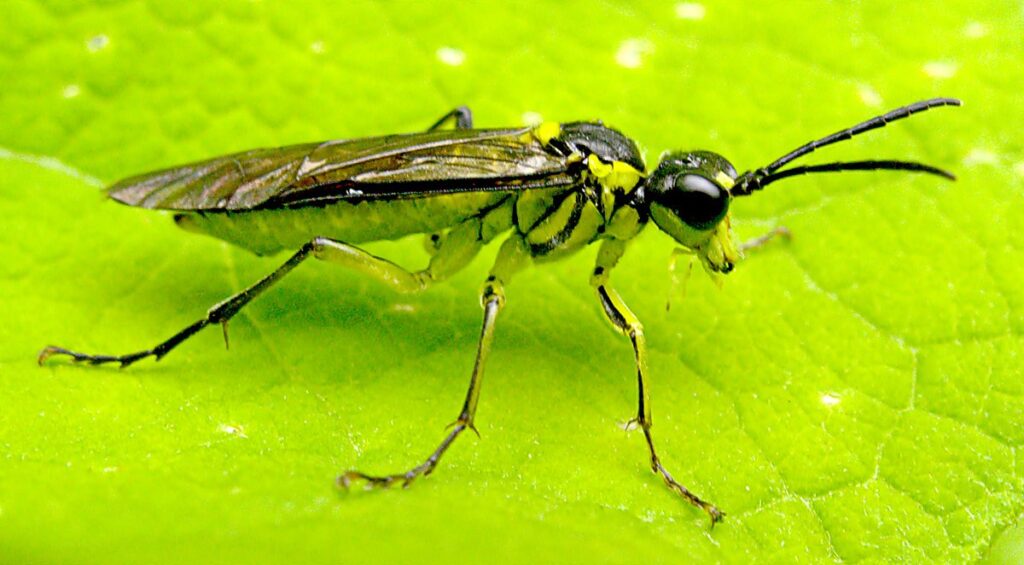
| Caterpillar-like, with legs along the length of the body | Caterpillar or sawfly larva | Leaf feeder, not a root feeder |
| Grub inside a grain or nut, with a small round exit hole | Grain or nut weevil. It spends its whole larval life inside one seed | Pantry or orchard, not the garden |
One more useful habit: weevil adults mostly cannot fly, feed after dark, and drop off the plant and play dead the instant you disturb them. If you poke something and it goes rigid and falls, you are probably looking at a weevil.
Root weevils — the garden and landscape ones
These are the weevils most gardeners actually meet. They are nearly all Otiorhynchus and relatives, and in a place like Colorado there are at least seven worth knowing, largely because they move around freely in nursery stock.
| Species | What it goes for |
|---|---|
| Black vine weevil Otiorhynchus sulcatus | Euonymus, heuchera, astilbe, hosta, creeping jenny, peony, wisteria — plus strawberries, grapes, rhododendron, yew and hemlock. Over 100 woody and herbaceous hosts |
| Strawberry root weevil O. ovatus | Strawberry, raspberry, rhubarb, white clover, dandelion, dahlia, mint, and various trees and shrubs |
| Rough strawberry root weevil O. rugostriatus | Rose, strawberry, raspberry, gooseberry, cotoneaster |
| Lilac root weevil O. meridionalis | Lilac, privet, peony, euonymus |
| Hairy spider weevil Barypeithes pellucidus | Cherry, elm, hawthorn, oak, and herbaceous plants including aster, dandelion, ragwort, thistle |
| Dyslobus decoratus | Cherry, buckthorn, assorted shrubs |
| Trachyphloeus asperatus | A small weevil; hosts not well documented |
Telling the two common ones apart is easy, because it comes down to size. Black vine weevil adults are 9–13 mm — a little under half an inch — slate grey to black with small patches of short golden hairs on the wing covers. Strawberry root weevil adults are about a fifth of an inch, shiny black to light brown, with rows of small pits down the back and a blunt snout.
The larvae of both are effectively identical: C-shaped, cream, legless, brown-headed, starting around 3/8 inch and reaching about 5/8 inch by the end of summer. You cannot tell them apart in the soil, and you don’t need to — the treatment is the same.
The detail that explains why they spread so well: black vine weevils and strawberry root weevils produce only females, reproducing asexually. No mate required. A single black vine weevil can lay up to 500 eggs over two to three weeks entirely on her own, which is why one hitchhiker on a nursery plant becomes a population. Inspect new container plants before they go in the ground. (Lilac root weevil, for what it’s worth, does produce both sexes.)
Read the damage before you treat anything
Root weevil damage comes in two forms and only one of them matters. Getting this backwards is the most common mistake there is, and it’s why people spray leaves for a whole season while the real damage continues underground.
- Angular or crescent-shaped notches bitten out of leaf margins. That’s adult feeding, at night. It is almost entirely cosmetic. Treat it as a signal that adults are out, not as an emergency.
- Wilting, yellowing, stunting or sudden collapse with nothing visible on the foliage. That’s larvae eating roots, and that’s what kills plants. In strawberries it shows up as small, weak plants that yield badly and die over winter.
Be honest about the odds, though: in ornamental landscape plantings, root pruning severe enough to cause real decline and dieback is rarely observed. Notched hosta leaves are usually just notched hosta leaves. It’s berries, containers and young plants where the larvae genuinely do damage — in strawberries, as few as 2 to 8 larvae per plant in a 20 × 20 cm soil sample has been enough to cause economic loss.
So when you see notching, don’t reach for a spray. Dig. Pull back the soil at the base of an affected plant and look for legless grubs. Autumn and early spring are the best times to check.
The calendar, which is most of the battle
One generation a year, and it’s predictable:
- Late winter to early spring — overwintered larvae pupate in the soil.
- Mid to late spring, into early July — adults emerge. They cannot fly, so they walk; they shelter near plant bases by day and get active about an hour after sunset.
- Then 21 to 42 days of feeding before any eggs are laid. This is the window where notching appears and nothing is in the soil yet — your best chance to cut next year’s population.
- Late spring and early summer — eggs pushed into soil cracks, hatching within a few days. Larvae move down to the roots and feed through summer and autumn.
- Mature larvae overwinter in the soil, and the whole thing goes round again.
Small larvae die far more easily than large ones. Mid-July through mid-September — after most eggs have hatched, while the grubs are still small and the soil is still warm — is when soil treatment actually works.
Vegetable weevils
Different species, different crops, and in two of the three cases the larva is somewhere you can’t spray.
Carrot weevil Listronotus oregonensis
Adults are 2–6 mm, mottled brown, with an elongated snout. They rarely fly and feign death when disturbed. They go for the carrot family — carrots, celery, parsley and parsnips — and adults scar foliage and petioles while laying eggs. The larvae are the problem: they tunnel into roots and crowns, stunting plants and killing them, with recorded yield losses of up to 100% in unmanaged parsley. One generation a year in northern gardens, overwintering in plant debris and soil. Crop rotation is the main control, plus clearing debris so there’s nowhere to overwinter. Baited wooden traps work for monitoring.
Pepper weevil Anthonomus eugenii
Small dark snout beetles about 0.13 inch long, with a beak longer than the head and thorax combined. The larvae are white, legless, under a quarter inch, and they develop inside the fruit — which is why you can’t spray your way out of it. What you notice first is yellowing buds and fruit, buds and young pods dropping off, and the pods that remain coming out misshapen with yellow or red blotches and holes. Management is almost entirely sanitation: pull and destroy pepper plants as soon as harvest ends, which reduces the problem the following year, and get rid of any nightshade weeds nearby, since those are its alternative host.
Pea leaf weevil Sitona lineatus
Greyish-brown, slender, about 0.19 inch, with parallel striations on the wing covers and three faint light stripes on the thorax. Adults chew distinctive half-circle notches into leaf margins of peas, faba beans, alfalfa, clover and vetch. The larvae do something unusual: they feed on the rhizobial root nodules — the nitrogen-fixing nodules your legumes depend on.
The redeeming detail is that it’s a seedling problem. Seedlings can be killed if the growing tip is damaged, but once a plant has six or more expanded leaves and an intact growing tip, significant injury is unlikely. So get them past six leaves and you’ve largely won. Rotate, plant beans away from other legumes, and keep water and fertility up so the crop outgrows the defoliation.
In the southern US a cool-season species called the vegetable weevil also attacks brassicas and root crops; the approach is the same as for root weevils below.
Orchard weevils
Plum curculio Conotrachelus nenuphar
If you grow apples or stone fruit and your young fruit has crescent-shaped scars on it, this is a weevil, and almost nobody realises that.
Adults are 1/6 to 1/4 inch, speckled grey, brown and black, with the long curved snout and four pairs of ridges along the back — only one pair of which is easy to see. Hosts are apple, pear, quince, plum, cherry, peach and apricot, plus wild plum, native crabapple and hawthorn, which is often where they come from.
The signature damage: the female cuts a shallow egg-laying slit about 3/16 inch long, leaving a crescent-shaped scar that expands into a large semicircular lesion as the fruit grows. On stone fruit the wound weeps clear or amber sap. Later in summer, the new generation of adults chews round holes about 3/16 inch across and 3/16 inch deep, usually near the stem end.
They overwinter in leaf litter in wooded areas — around 300 days a year, in fact — and move into trees about bloom. Egg-laying runs 3 to 5 weeks after bloom ends, eggs hatch in roughly a week, larvae develop over about 16 days, then drop and pupate 1 to 2 inches down in the soil. New adults appear early August to mid-September.
Organic options that genuinely work:
- Beat the branches over a white sheet early in the morning from around petal fall, and kill what drops. It works, and the catch is that it needs repeating nearly every day for about four weeks from bloom.
- Pick up every dropped fruit and bury or bin it. Do not compost it — composting does not kill the insects inside.
- Kaolin clay (sold as Surround) as a physical barrier, reapplied often, or bag individual fruit in plastic bags with the bottom corners cut off.
- Prune the canopy open while dormant, and remove abandoned or neglected fruit trees nearby — though adults travel over a quarter mile, so that one has limits.
Traps and natural biological control have not been shown to prevent fruit damage, so don’t build your plan around them.
Acorn and nut weevils Curculio spp.
This is the one people find most alarming and need to worry about least. The adult is a brown beetle about 3/8 inch long with an absurdly long, thin snout. Females lay eggs inside developing acorns and hickory nuts on the tree; the larva — legless, curved, creamy white, brown head, a quarter to 3/8 inch — eats the inside of the nut, then chews a perfectly round 1/8 inch hole and leaves.
Which is why you find cream-coloured grubs crawling around under an oak in late autumn. Eggs go in mid-summer, larvae feed until fall, they leave when the nuts drop and tunnel into the soil, and they stay down there for one to two years before emerging as adults.
Nothing needs doing. They ruin individual nuts but don’t damage the tree, and control isn’t practical on a backyard oak or hickory. If you want sound nuts for yourself, the answer is to collect them early — before the squirrels, who sort through and leave you the wormy ones.
Oh — you’re here about the ones in your rice
Then this section is for you, and the good news is that it’s a contained problem with a permanent fix.
First, the flour question. If you found insects in flour, cornmeal, pasta, nuts or dried fruit, they are probably not weevils at all. Grain weevils develop only inside whole, intact kernels and seeds, and they rarely infest milled products or nuts. What’s in your flour is far more likely a flour beetle, a sawtoothed grain beetle, or Indianmeal moth larvae.
That distinction matters, because the cleanup is the same but the source isn’t: weevils ride in inside the grain itself, while flour beetles and moths move between packages. If you have the latter, there’s a package somewhere you haven’t found yet.
Three species cause nearly all actual weevil problems in food, and they’re all Sitophilus — less than 3/16 inch long, dark, snouted.
| Species | Size | How to tell it | Can it fly? |
|---|---|---|---|
| Rice weevil Sitophilus oryzae | About 3/32 in | Four reddish or yellowish spots on the wing covers | Yes, but mostly walks |
| Granary weevil S. granarius | 3/16 in or smaller | No spots; thorax pitted with oval punctures | No — no functional wings |
| Maize weevil S. zeamais | 1/8–3/16 in | Thorax uniformly pitted with round punctures | Yes, strongly |
| Bean weevil Acanthoscelides obtectus | About 1/8 in | No conspicuous snout. In dried beans and peas | Yes |
Why they’re in there, and why it isn’t your fault
This is worth understanding, because it changes what you do next.
A female grain weevil bores a hole into a single kernel, lays one egg inside it, and plugs the hole behind her. The larva hatches, eats out the inside of that one kernel, pupates in it, and chews its way out as an adult — which is what those small round exit holes in grain are. A rice weevil lays 300 to 400 eggs in her life; a granary weevil, 50 to 250. Egg to adult takes roughly 25 to 35 days.
So the grain arrived carrying them. Unopened packaging is no protection, because the eggs were already sealed inside individual kernels before the bag was filled — and adults can chew through packaging or crawl in through folds and seams anyway. A scrupulously clean kitchen gets weevils just as readily as a messy one.
Are they dangerous? No. Pantry pests don’t bite or sting people or pets. If you ate some in a bowl of rice before you noticed, nothing is going to happen to you. The real issue is volume — pantry pests contaminate considerably more food than they actually eat. Throwing out what’s infested is a quality decision, not a medical one.
Getting rid of them
- Find the source and throw it out. Check everything, including pet food, birdseed, and the packages behind the packages. One overlooked bag restarts the whole thing.
- Vacuum, don’t wipe. Get into shelf cracks, corners and screw holes with a crevice tool, then empty the canister or bin the bag outside. Washing shelves with detergent, bleach or ammonia will not prevent re-infestation — it just makes the shelf clean.
- Decontaminate anything you want to keep. Freeze at 0 °F for at least four days, or spread it in a shallow pan and hold it at 130 °F for at least 30 minutes. Both kill every life stage, eggs included.
- Re-house everything in glass, metal or heavy plastic with a real seal. Bags and boxes are chewable; jars are not. This one change ends most recurring pantry problems permanently.
- Buy smaller amounts — quantities you’ll use within two to four months, oldest first. Grain weevils want grain at around 12.5% moisture or higher, so cool, dry, sealed storage works against them on its own.
The bay leaf thing doesn’t work. It’s on every pantry-pest list on the internet, and University of Minnesota Extension says it plainly: there is no evidence that bay leaves — or sticks of spearmint gum — prevent or get rid of stored food insects. Keep the bay leaves for soup. The sealed jar is what does the job.
The ones walking across your floor, eating nothing
Every summer, people find small dark snout beetles in the bath, on windowsills, crossing the kitchen floor — and assume something in the house is infested. Almost always, nothing is.
These are root weevils that came in from the garden, and which one it is depends on the month:
- Strawberry root weevil — the usual culprit, and it comes in during hot, dry weather in late June and July. It is looking for moisture, not food.
- Hairy spider weevil and Trachyphloeus asperatus — early summer.
- Black vine weevil and rough strawberry root weevil — late summer and early autumn.
Indoors they do no injury to people, pets or furnishings, and they cannot reproduce in your house. They are a temporary nuisance that ends on its own. There is nothing in your pantry, your plants or your carpet that they are eating.
What actually helps:
- Vacuum them up as you see them. That’s the control.
- Seal the openings they’re using — around pipes, sill plates, door sweeps, window frames.
- Water less right against the foundation. They’re drawn to shade and moisture there, and dialling that back reduces how many arrive.
- Consider moving their favourite host plants away from the house walls.
- Don’t bother with indoor insecticides. They aren’t effective for this, and the beetles will have stopped coming within a few weeks anyway.
The weevils that are on your side
With 83,000 species, the overwhelming majority of weevils are not pests of anything you own — and a few are actively useful.
The best example is the milfoil weevil (Euhrychiopsis lecontei), an aquatic weevil native to North America. Its original host is a native milfoil, but once it encounters invasive Eurasian watermilfoil it prefers it. Adults feed on leaves and stems, and the larvae tunnel into the stems and eat out the inner tissue — enough to weaken stems until plants sink and whole beds collapse. In most Michigan lakes where it has been stocked, lake-wide control arrived within one to four years.
It isn’t magic. Results vary, it won’t eliminate milfoil from a lake — and that’s by design, since some milfoil has to remain to support the weevils that keep it in check. Natural populations rarely reach controlling densities on their own, partly because sunfish eat them. But it’s a genuine case of a native weevil doing free work against an invasive plant, and it’s worth knowing that the family has members other than the ones in your rice.
And the famous one
The boll weevil is the weevil most people have actually heard of — songs, a monument in Alabama, a decades-long eradication campaign across the American cotton belt. It is a cotton pest. Unless you are growing cotton, it is not your problem, and nothing on this page is aimed at it.
Treating garden weevils, in the order that works
- Beneficial nematodes — but the right species, matched to soil temperature. This is the one treatment that reaches the stage doing the damage, and species choice decides whether it works at all. Heterorhabditis bacteriophora is the recommendation for root weevil larvae in warm soil — it works best above 70 °F. Steinernema kraussei is effective across a much wider range, 40 °F to 86 °F, which makes it the one for cool spring and autumn soil. Timing matters as much as species: apply after most eggs have hatched and while the soil is still warm, broadly mid-July to mid-September, when the larvae are small and easiest to kill. Water the area thoroughly so the nematodes reach the root zone, apply in early morning or evening because UV light kills them, and keep the soil moist afterwards. More than one application may be needed if the larvae are already large. And know the limit: nematodes do not kill adult weevils. They cut next year’s adults by killing this year’s grubs. More on choosing and applying beneficial nematodes →
- Hand-pick adults after dark. Flightless, night-active, slow, and inclined to drop and play dead makes them unusually easy to collect. Go out about an hour after sunset with a torch, hold a tray or open jar under the foliage, and tap — they’ll fall straight into it. Drop them in soapy water. Tedious, but genuinely effective at garden scale, and every adult you take is up to 500 eggs that never get laid.
- Use a cardboard refuge to monitor. Lay a folded piece of corrugated cardboard at the base of a susceptible plant and check it in the morning — adults shelter in it through the day. This tells you when emergence has started, which starts the 21-to-42-day clock before egg-laying.
- Cultivate the soil in early spring, before planting. Working the top few inches kills overwintering larvae outright. Free, chemical-free, and badly underused.
- Rotate with a cereal cover crop. Small grains are not weevil hosts, so a season of oats, rye or barley starves the soil population out. For anyone with strawberry or root-vegetable beds this is the strongest tool on the list, and it costs nothing but a season.
- Sticky barriers on containers and stems. They can’t fly, so they have to climb. A sticky band around a pot or stem stops them — which makes this far more effective against weevils than against most pests. Best in greenhouses and on container plants.
- Clear debris and go easy on deep mulch in spring and autumn, since adults shelter in loose litter by day. Don’t compost visibly infested material.
- Inspect new plants. Nursery stock is how root weevils arrive and how they move between gardens. Knock a new plant out of its pot and look at the root ball before it goes in the ground.
Things that get recommended but won’t carry the job
Being straight about this saves you a season.
- Neem oil and insecticidal soap will kill adults they directly contact, so they have a role during the emergence window. They do essentially nothing for larvae, because the problem is six inches underground in soil that binds the active ingredient before it gets there. Spraying leaves does not treat a root problem.
- Diatomaceous earth works by abrading and drying out insects that walk through it, which means it only works dry. After rain or overhead watering it does nothing until it dries again, and it kills indiscriminately. Fine as a dry barrier in a greenhouse or around containers; unreliable outdoors.
- Companion planting. Garlic, onions, mint, tansy and wormwood all get recommended for repelling weevils, and there’s no solid evidence that any of them does. Plant them for the reasons they’re genuinely worth planting; don’t rely on them to protect a strawberry bed.
- Traps, for orchard weevils. Trapping and natural biological control have not been shown to prevent plum curculio damage. The sheet-and-stick method and picking up drops are what work.
Related pest guides
- Beneficial nematodes — how to choose and apply them
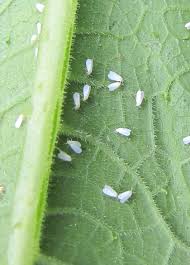
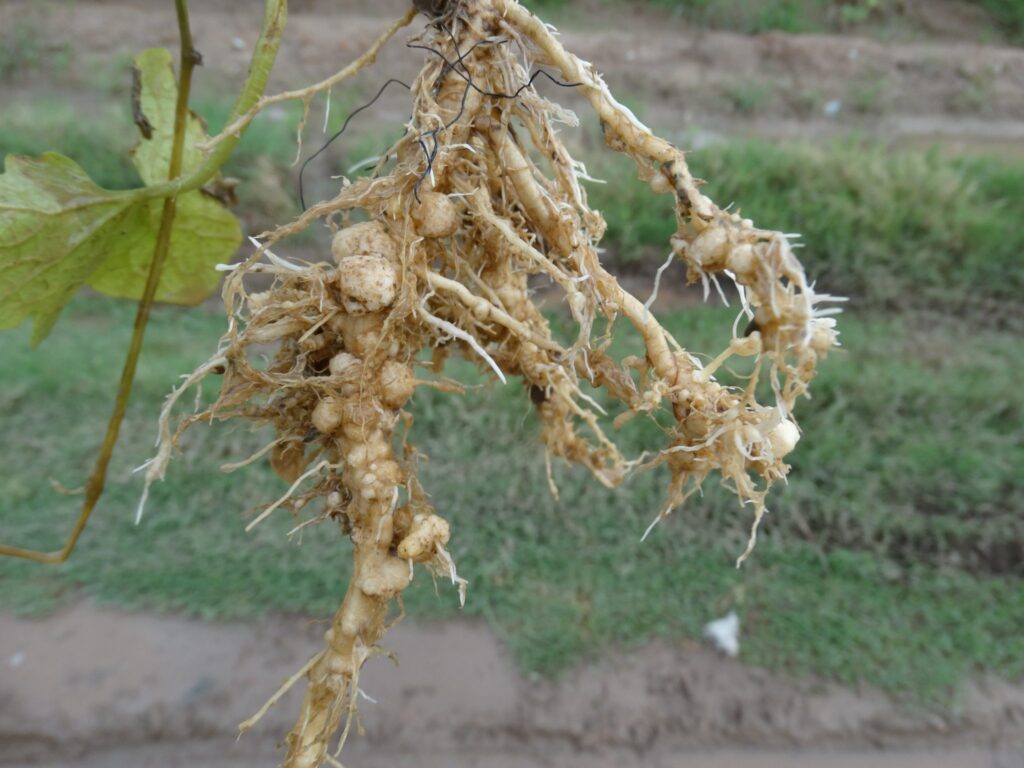
- Garden beetles, sawflies, aphids and whiteflies
- Growing guides for the plants weevils favour: strawberries and berries, lettuce, beets, carrots
- All organic pest management guides
Common questions
Are garden weevils and pantry weevils the same insect?
No, and nothing moves between them. Garden weevils are root-feeding Otiorhynchus species that cannot survive in a cupboard. Pantry weevils are grain-feeding Sitophilus species with no interest in your plants. Finding one tells you nothing about the other.
Can I still eat rice or beans that had weevils in them?
Nothing harmful will happen if you already did — they don’t bite, sting or carry anything. But they contaminate a great deal more than they consume, so the practical answer is to throw infested food out. For a large quantity you’d rather not lose, freezing at 0 °F for four days kills everything in it.
How did weevils get into a sealed bag?
They were almost certainly inside before it was sealed, as single eggs plugged into individual kernels. Adults can also chew through packaging and crawl in through seams, so both routes are real — but with grain weevils specifically, the bag usually arrived with them.
There are little brown beetles all over my bathroom. Is my house infested?
Almost certainly not. Strawberry root weevils come indoors in hot, dry weather looking for moisture, mostly in late June and July. They don’t feed or reproduce indoors and they damage nothing. Vacuum them, seal the gaps they’re using, and water less against the foundation.
I only see leaf notches. Do I need to treat?
Not the leaves. Notching is cosmetic and the plant will be fine — in ornamental plantings it rarely amounts to anything more. What it tells you is that adults are out and will be laying eggs within three to six weeks, which makes it the cue to plan a soil treatment for late summer and to start hand-picking at night now.
Which nematode do I buy?
Match it to soil temperature, not air temperature. Warm soil above 70 °F: Heterorhabditis bacteriophora. Cool soil, roughly 40–86 °F: Steinernema kraussei. S. feltiae is widely sold and widely recommended for this, but it’s primarily a fungus gnat and thrips nematode — not the best match for weevil larvae.
Will nematodes get rid of the adults I can see?
No. Nematodes kill larvae in the soil. The adults walking on your plants tonight won’t be affected, which is why hand-picking during the emergence window and soil treatment later in the season are two separate jobs, not alternatives.
Something is laying crescent-shaped scars on my young apples. Is that a weevil?
Yes — plum curculio, and that crescent is its egg-laying slit. Pick up and bin every dropped fruit (don’t compost it), and beat the branches over a white sheet in the early morning from bloom onward.
Grubs are crawling out of the acorns in my yard. Should I do something?
No. Acorn weevil larvae ruin individual nuts but do nothing to the tree, and control isn’t practical on a backyard oak. They’ll tunnel into the soil and disappear.
Why do they keep coming back every year?
Usually because the treatment hit the wrong stage, at the wrong time, or both. One generation a year means a single well-timed late-summer soil treatment plus a season of cereal cover crop breaks the cycle far more reliably than repeated foliar spraying ever will. And if they keep appearing on newly bought container plants, the nursery is your source.
Sources
Michigan State University Extension. Eurasian watermilfoil and the milfoil weevil (WQ61).
Colorado State University Extension. Root weevils. — species list, host plants, life cycle, indoor invasion and nematode timing.
Penn State Extension. Black vine weevil.
University of Wisconsin–Madison Division of Extension. Black vine weevil.
University of Wisconsin Fruit Program. Strawberry root weevil and black vine weevil.
Sound Horticulture. Black vine weevil tech sheet — nematode species and soil temperature ranges.
UW–Madison Vegetable Crop Entomology. Carrot weevil.
UC Statewide IPM Program. Pepper weevil.
Pacific Northwest Insect Management Handbook. Pea leaf weevil.
University of Wisconsin–Madison Division of Extension. Plum curculio.
Iowa State University Extension. Acorn and nut weevils.
University of Minnesota Extension. Pantry pests: insects found in stored food.
Oklahoma State University Extension. Stored grain insect pests that feed inside kernels and seeds.
University of Kentucky Entomology. Stored product pests in the pantry (ENTFACT-612).